Guides
Quebec City vs Victoria Car-Free Winter Walks
Quebec City vs Victoria car-free winter walks: compare snow, slopes, downtown routes, Quebec's rail arrival, and Victoria's walk-on ferry choices.
What to take away
A Quebec City vs Victoria car-free winter trip comes down to snow, slope, and the arrival route.
- Quebec City delivers a snow winterJanuary highs often stay below freezing, sidewalks are cleared but slick, and the walled old town is small enough to cross on foot in half an hour.
- Victoria delivers a wet, mild winterhighs near 7 C, almost no snow, and a level harbour downtown that stays open to walkers.
- Neither city needs a car for its core tripQuebec City pairs rail access with a local ferry, while Victoria has several walk-on ferry choices. For general preparation, see this ferry booking.
- Choose Quebec City for snow and atmosphere, Victoria for long, comfortable walking days.
- Two nights covers the centre of either city; three nights lets you add one outer neighbourhood.
What actually differs
Climate decides most of the rest. Quebec City sits in a cold continental pocket where January highs commonly stay below freezing and snow stays on the ground for weeks. Victoria sits in a Pacific coastal mild belt where January highs hover near 7 C and snow is rare and short-lived.
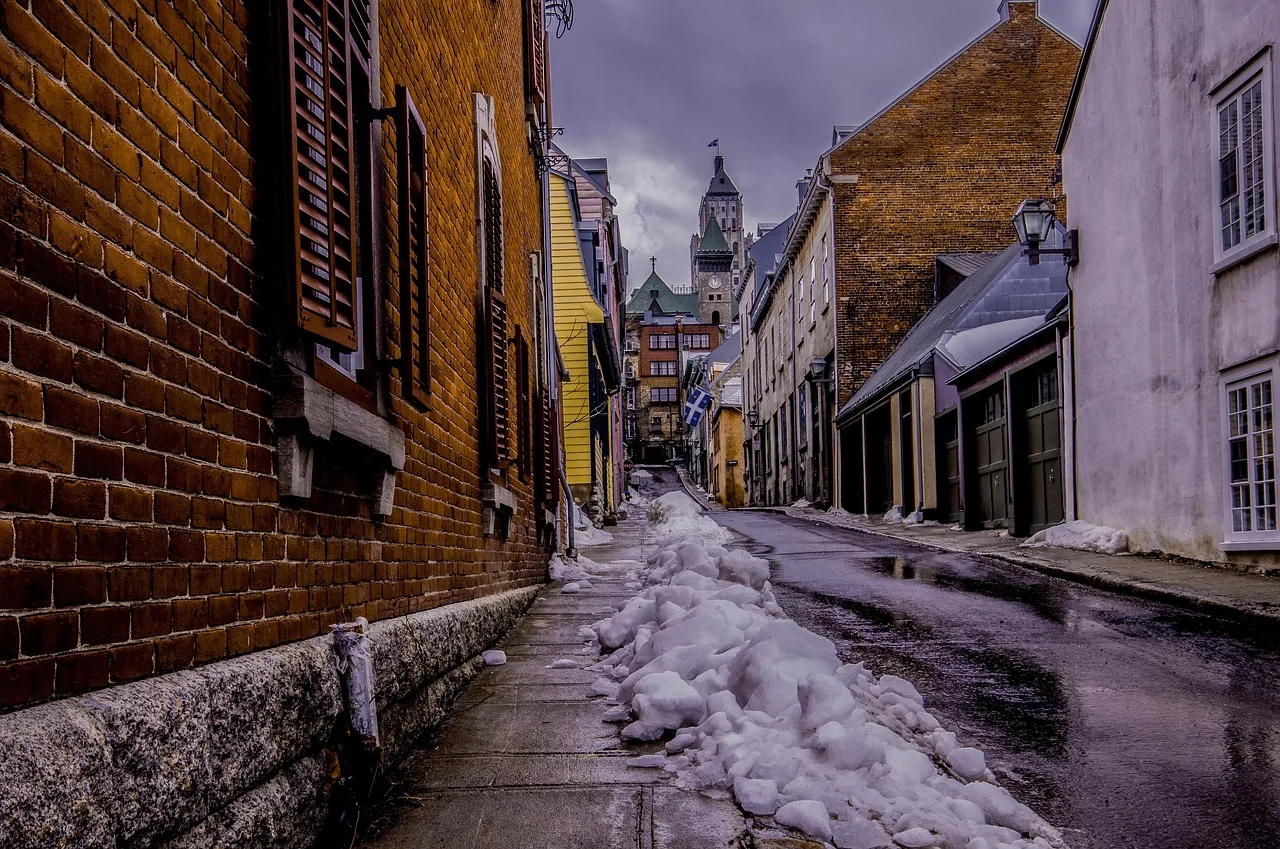
Terrain splits them further. Old Quebec sits on a plateau above the river, and the drop between Upper and Lower Town is steep. The Funiculaire du Vieux-Québec connects the levels, while the Escalier Casse-Cou (Breakneck Stairs) is a steep pedestrian route between them. In winter, the funicular avoids the climb; ice on that grade is harder than ice on a flat street.
Victoria spreads its downtown and Inner Harbour across level ground. Dallas Road adds a waterfront loop with no serious climb.
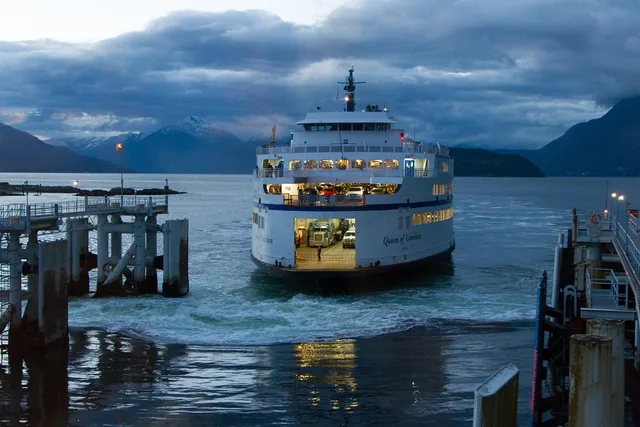
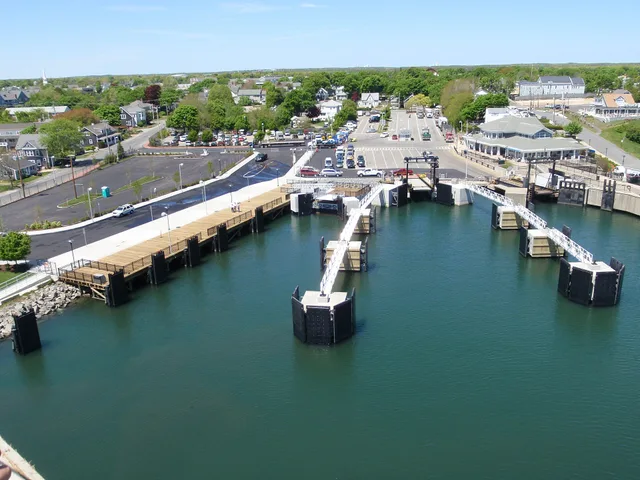
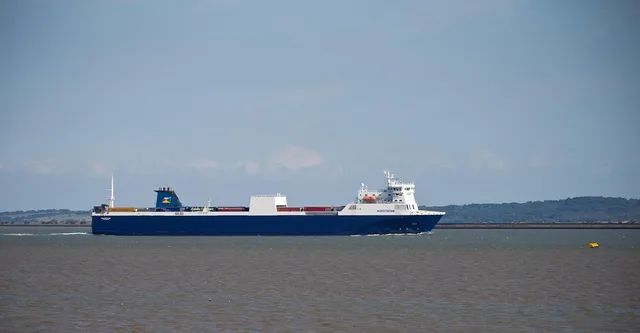
Car-free arrival differs. VIA Rail's Montreal–Quebec City service ends at Gare du Palais, inside the old town and a short walk from most hotels. The Traverse Québec-Lévis ferry, operated by the Société des traversiers du Québec, is a separate local crossing between Quebec City and Lévis. Victoria has no downtown rail arrival; most car-free visitors arrive as foot passengers on a ferry. BC Ferries sails from Tsawwassen to Swartz Bay, with onward BC Transit bus service; the Victoria Clipper sails from Seattle, and Black Ball Ferry Line's Coho sails from Port Angeles, with both reaching Victoria's Inner Harbour. Check each operator's current sailing schedule, walk-on availability, and fares for your dates; schedules and prices vary.
If you want a route you can hold to in poor light, start with building a well-paced walking day and work backward from the daylight hours you actually get.
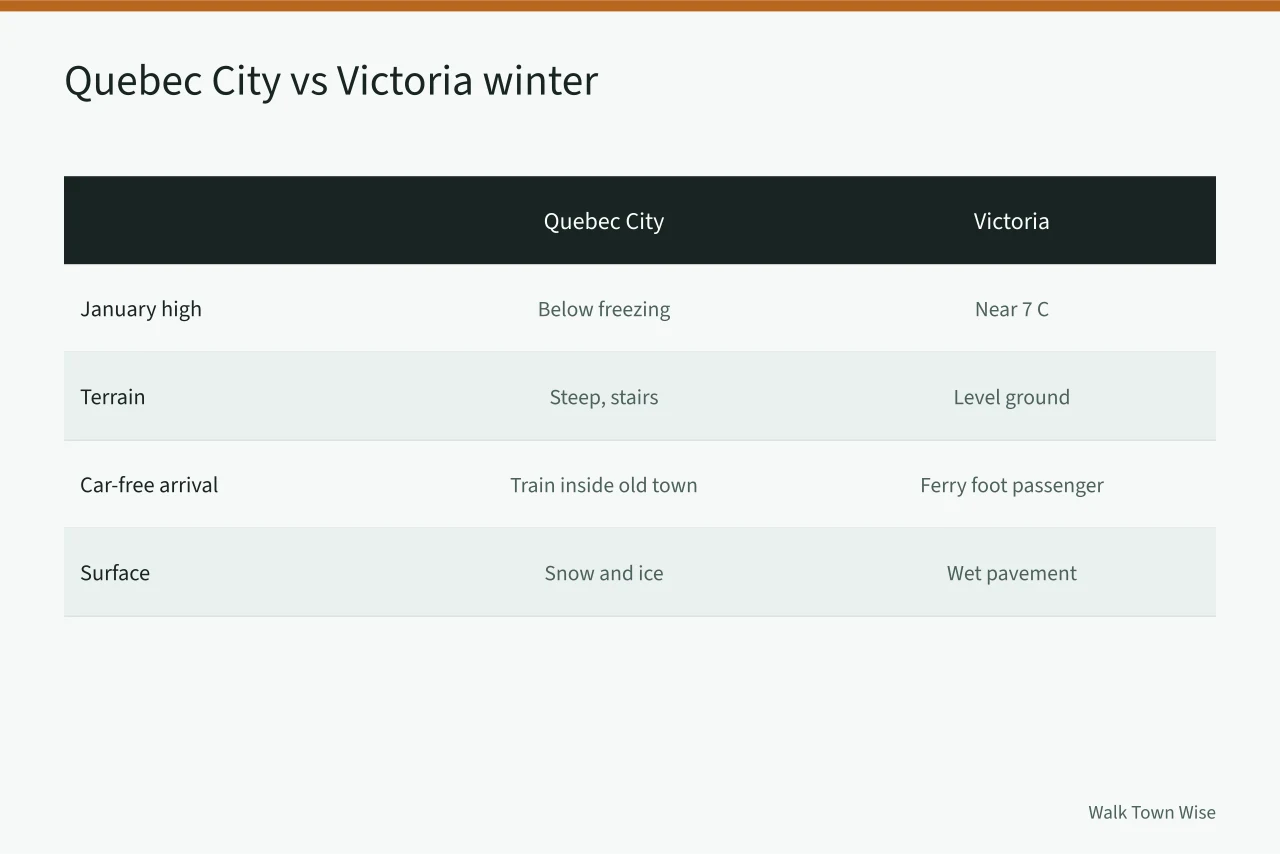
The criteria matrix
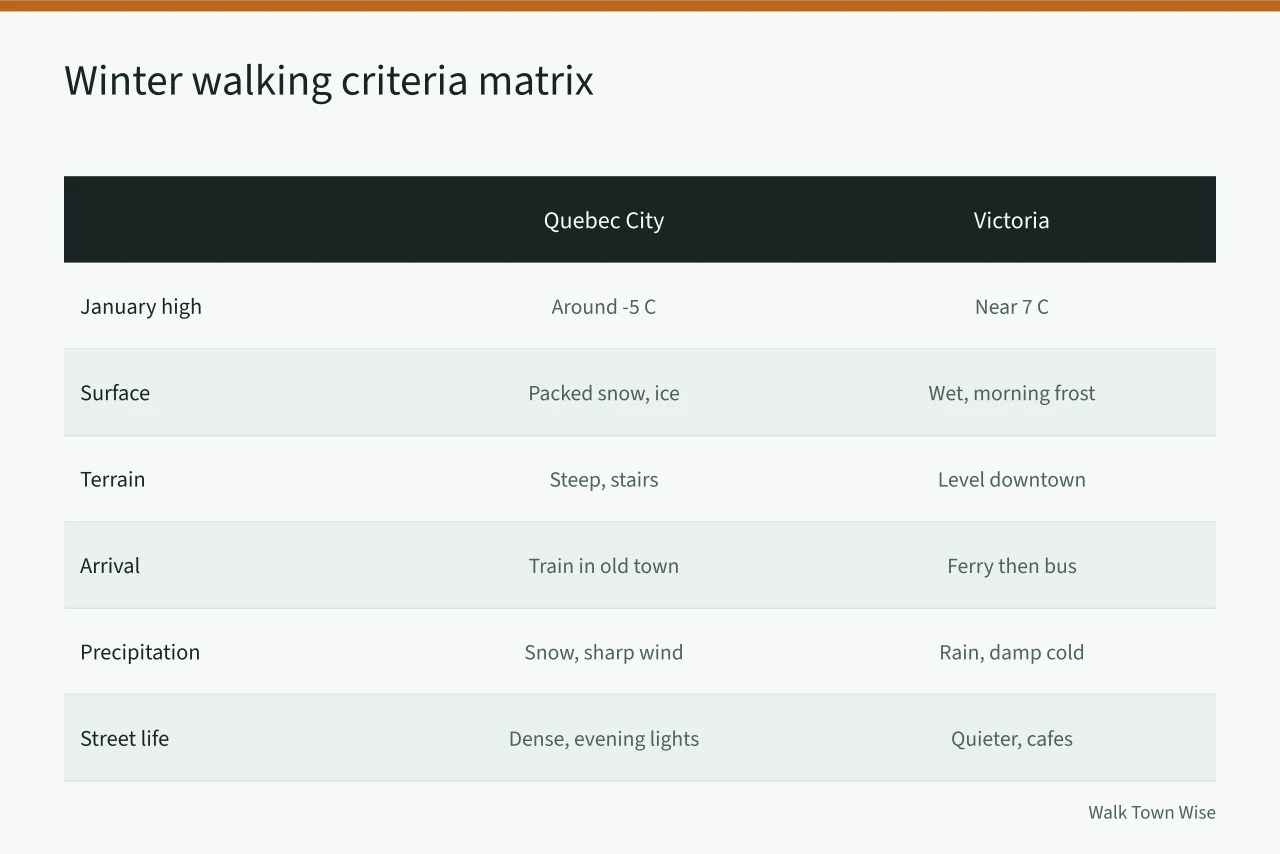
Quebec City
- January daytime high
- Often below freezing, around -5 C in the core
- Walking surface
- Packed snow, ice patches, salt and grit
- Terrain
- Steep in Old Quebec, with stairs between levels
- Car-free arrival
- Train to a station inside the old town
- Daylight at the solstice
- Roughly eight hours
- Precipitation
- Snow, dry air, sharp wind
- Winter street life
- Dense, with seasonal events and evening lights
Victoria
- January daytime high
- Near 7 C
- Walking surface
- Wet pavement, occasional morning frost
- Terrain
- Level downtown and harbour
- Car-free arrival
- Ferry as a foot passenger, then bus or walk
- Daylight at the solstice
- Roughly eight hours
- Precipitation
- Rain, damp cold, moderate wind
- Winter street life
- Quieter, with cafes and waterfront paths
Where each city is the right answer
Quebec City is the right answer when snow is the point. You want the photograph, the cold air, and evening lights on a narrow street; the Carnaval de Québec gives winter visitors a named seasonal event when its dates line up with the trip. For a compact walk, follow Dufferin Terrace, descend on the Funiculaire du Vieux-Québec to Petit-Champlain, and return uphill only if the surface is safe. You also accept that traction and warm layers are not optional; the station sits inside the walking district, making the city the stronger rail-arrival choice.
Victoria is the right answer when distance matters more than atmosphere. Walkers planning 10 to 15 km days in January find the flat waterfront easier on the legs, with no ice to plan around. A simple route follows Government Street to the Inner Harbour, then continues along Dallas Road before turning back. It suits strollers, canes, or a companion who dislikes cold.
A good walking itinerary design by season explains why winter routes should follow daylight rather than distance.
What both cities share as a limit
Both depend on municipal sidewalk clearing, and in both places the road gets attention first. After a heavy snowfall or a freezing-rain event, residential blocks and side streets can stay rough for a day or more. Your route is only as good as the last clearing pass, and no Canadian city guarantees a bare, dry surface in midwinter.
A downtown's sidewalk width and walkability matters more in winter than in summer, because banked snow narrows the clear path at exactly the kerbs you need to cross. Both cities also sit close to the same latitude, so the solstice gives each roughly eight hours of light.
How to choose between the close calls
- Decide what weather you can walk in for four hours. Rain with a good shell is manageable. Ice on a slope is not for everyone.
- Sort the arrival leg first. If the train seat or the ferry booking is the awkward part, that usually settles the choice.
- Match the route to the bodies in the group. Flat and wet beats steep and frozen when anyone has balance or joint concerns.
- Book the middle of the season, not the edges. Late January and early February hold the most reliable conditions in both cities. Check Environment and Climate Change Canada's weather tools and climate records for the past ten winters before you fix dates.
- Sort the bag last, using a what to pack list built for the forecast you just checked.