Rules
Part of Ferry trips planning: what to settle before you book
4 details of accessible ferry travel people miss
Accessibility on a ferry route depends on the ramp, the tide and the terminal. The specific questions to ask, and why water level changes the answer.
What to take away
- Accessibility on a ferry is decided at the gangway, and the gangway angle changes with the tide.
- Ask about specific features and specific barriers. A single word like "accessible" tells you nothing.
- Most coasts get two high and two low tides in a lunar day, so boarding conditions vary within a single day.
- Confirm arrangements with the operator in writing, and again on the day, because vessels get substituted.
Detail 1: the tide decides the gangway angle
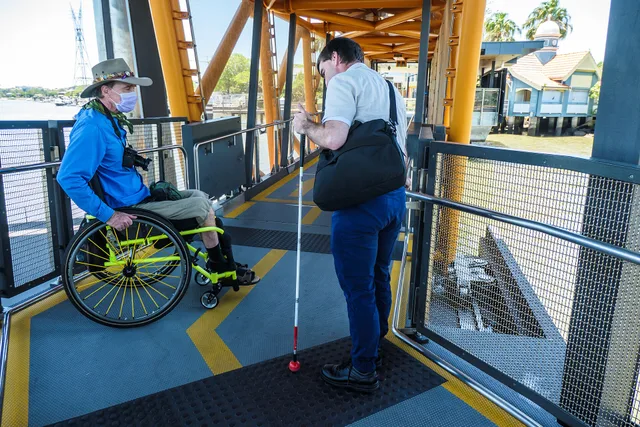
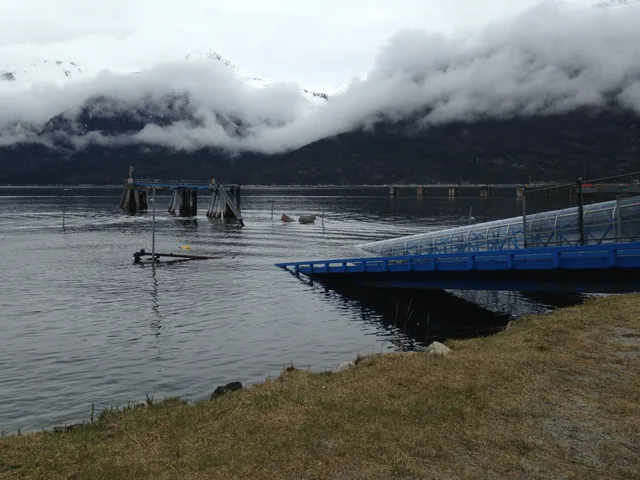
On a floating dock, the gangway pivots. At low water it is steeper; at high water it flattens. That is the difference between boarding a wheelchair user can make independently and one that needs help.
Asking for the slope as a ratio is the quickest way to compare one sailing with another. The ADA's ramp standard for the built environment caps a running slope at 1:12, one unit of rise for every twelve of run, and a gangway steeper than that is a different proposition for someone propelling a chair or walking with a cane. So ask the operator for the gangway slope at the sailing you are considering, and ask what it becomes at low water.
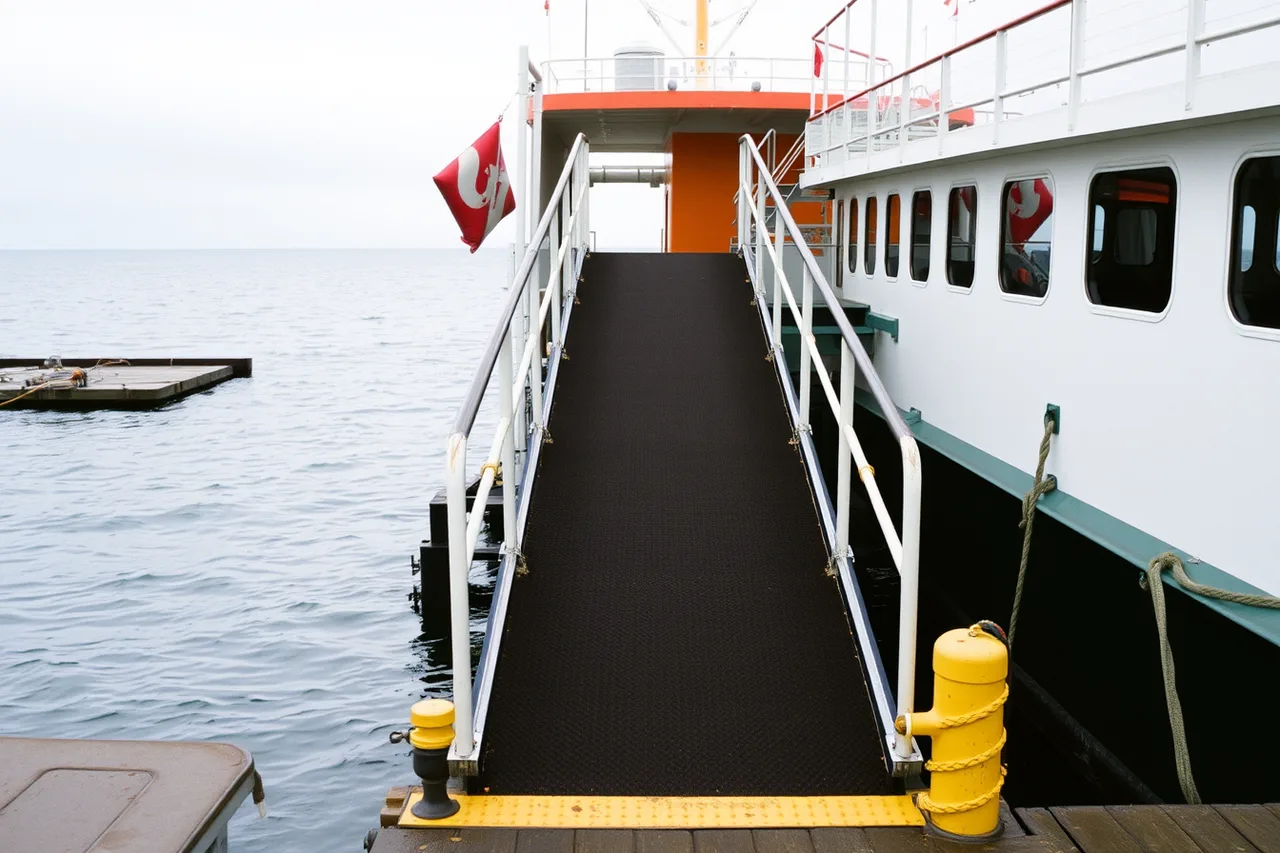
The rhythm is regular and published. NOAA explains that coastal areas experience two low tides and two high tides every lunar day of 24 hours and 50 minutes.
A lunar day runs longer than a solar day because the moon travels the same direction Earth spins, so it takes an extra 50 minutes to catch up. Boarding conditions on a given route shift through the day and drift later each day.
If the ramp matters to you, ask which sailing has the easiest boarding and plan around that one rather than the most convenient hour.
Detail 2: the vocabulary that makes a difference
Water levels are quoted against a reference, and the reference has a name. NOAA's tidal datums page defines a tidal datum as a standard elevation set by a phase of the tide. It is used as a reference for measuring local water levels and tied to fixed points known as bench marks.
The page lists the specific datums maintained by the Center for Operational Oceanographic Products and Services. One is mean higher high water, the average of the higher high water height of each tidal day across the National Tidal Datum Epoch.
You do not need the arithmetic. You need to know that a figure like "clearance at the ramp" is meaningless without saying which datum it is measured from, and a terminal that can answer that question has thought about the problem.
Detail 3: questions worth asking the operator
- Is there step-free access from the parking area to the boarding point?
- Is boarding by gangway, ramp, lift or elevator, and does that change with the tide?
- Is there an accessible toilet on the vessel, and on which deck?
- Are there designated spaces for wheelchairs, and can they be reserved?
- Is assistance available, and does it need booking in advance?
- Is the terminal on the far side served the same way, or is it different?
- What happens if the scheduled vessel is substituted?
That last question catches the most people. A route can be fully accessible on its usual boat and not on the relief vessel.
Detail 4: beyond mobility
Accessibility means more than wheels. On a fast craft, check noise and vibration, seating with backs and armrests for anyone who cannot stand long, quiet spaces away from engine noise, stair lighting and contrast, and visual as well as audible announcements.
Ask about assistance animals and where they may travel. Ask about the walk from the arrival ramp to the nearest transport, often the real barrier on a small island.
The law behind the request
In the United States, the Americans with Disabilities Act covers ferry terminals and vessels. Publicly run systems such as Washington State Ferries, the Alaska Marine Highway System and the Staten Island Ferry fall under Title II, the part of the law that applies to state and local government services; private operators fall under Title III, which applies to businesses that serve the public.
There is no single federal notice period for requesting boarding assistance on a ferry. Operators set their own lead times, so ask for theirs when you book and confirm it in writing. Complaints about access on a ferry or in a terminal go to the U.S. Department of Justice, which enforces the ADA, and the U.S. Access Board, which develops federal accessibility guidelines, has published guidelines for passenger vessels.
Write the answers down with the date and the name of whoever gave them. The wider planning order sits in our ferry trip planning guide.