Guides
What the ADA guarantees on walk-on ferry routes, route by route
ADA ferry accessibility rests on 49 CFR Part 37 and USCG rules, and WSF, MBTA ferries and Casco Bay Lines show how boarding works in practice.
What to take away
- ADA ferry accessibility comes from two rulebooks: 49 CFR Part 37 for landside terminals and service, and USCG accessibility requirements for the vessels themselves.
- Public operators such as Washington State Ferries must run their terminals and ferry service so riders with disabilities can board, ride and leave on equal terms.
- Boarding ramps, gangways and accessible routes are built to the ADA Standards for Accessible Design, not to whatever hardware happens to be on the dock.
- WSF, MBTA ferries and Casco Bay Lines each publish their own access notes, and each handles boarding differently.
- You can file an ADA complaint with the operator, and WSDOT runs a separate disability access concerns process for its ferries.
What 49 CFR Part 37 requires of public ferry operators
49 CFR Part 37 is the federal rule that applies the Americans with Disabilities Act to transportation. It reaches public ferry operators because a ferry system is public transportation when a public entity runs it. Washington State Ferries, MBTA ferries and Casco Bay Lines all fall under that umbrella in different ways.
The rule covers more than the boat. It reaches the terminal, the dock, the fare machine, the schedule information and the staff who answer the phone. A rider who cannot reach the slip has not been given equal service, even if the vessel itself is fine.
Title II of the ADA sets the underlying duty: no public entity may exclude a person with a disability from its programs or give that person less service. The Americans with Disabilities Act Title II Regulations | ADA.gov lay out that obligation for public ferry operators such as WSF.
In practice, Part 37 means an operator cannot require a caregiver to lift a rider aboard. It cannot leave a wheelchair user waiting for a later sailing because the crew did not plan for the boarding. It cannot treat a mobility device as freight.
Reasonable modifications matter here. If a rider needs a different boarding sequence, a slower gangway approach or a specific seat, the operator has to work through that request rather than refuse it outright. Denial needs a real reason tied to safety or the design of the vessel.
Terminals carry their own duties: accessible parking, an accessible path to the ticket window, and a waiting area a wheelchair can turn around in. Those pieces are covered in more depth in our piece on accessible walk-on ferry routes.
The rule also governs communication. Announcements must be audible and, where a system provides visual information, visible. A rider who is deaf should not have to guess which slip is loading.
USCG accessibility requirements and how they sit alongside the ADA
USCG accessibility requirements are the vessel-side rules. The Coast Guard inspects ferries for safety and for the physical features that let riders with disabilities get on, move around and get off in an emergency.
That creates two overlapping systems. The ADA and 49 CFR Part 37 govern service, terminals and civil rights. The Coast Guard governs the certificate the vessel needs to carry passengers at all. A ferry can meet one and stumble on the other.
Coast Guard rules touch gangways, deck surfaces, handrails, restrooms and the route from the boarding point to a safe location. They also shape crew training and the emergency plan, because evacuation has to work for someone who cannot use stairs.
Where the two systems meet is boarding. A gangway that is too steep at low tide may satisfy a drawing and still fail a rider on the day. Operators check tide and current, which is why NOAA tide tables show up in ferry planning as much as in fishing forecasts.
The Coast Guard does not field ADA complaints. If a rider's problem is discrimination or a denied modification, that goes through the ADA process. If the problem is a broken lift or an unsafe ramp, the Coast Guard and the operator both need to hear it.
For riders, the practical upshot is simple: the boat has to be seaworthy and usable. Ask the crew about the gangway before you commit to a sailing if the tide is running unusually high or low.
WSF vessels and terminals: boarding ramps, gangways and accessible routes
Washington State Ferries is the largest ferry system in the country and the one most riders will test these rules against. Its routes run from Anacortes and the San Juan Islands down through the central Sound to Vashon and Southworth.
WSF vessels and terminals vary. Some slips load from a car deck with a wide ramp. Others use a passenger-only walkway with a grade that shifts with the tide. The Riders with disabilities | WSDOT page is the operator's own route-by-route breakdown of what to expect.
Elevators connect the terminal and the overhead walkways at the bigger terminals, including Colman Dock in Seattle. When an elevator is out, WSF has to provide an alternative boarding path rather than send riders home.
On board, accessible routes lead from the car deck or the passenger walkway to an enclosed cabin with seating and restrooms. Crews will direct riders to those spots and can help with a wheelchair if asked.
The ADA Standards for Accessible Design set the dimensions behind boarding ramps, gangways and terminal paths. Those figures are the baseline the ADA Standards for Accessible Design | ADA.gov describes, and they apply to new construction and alterations.
Bainbridge Island is a common first test for riders. Our Bainbridge Island ferry walk-on guide covers the walk-on approach at that terminal in detail.
A few WSF habits help. Arrive early, tell the ticket staff you need assistance, and ask which end of the vessel loads at your destination. Loading patterns differ by route and by how the boat is tied up.
MBTA ferries and the Boston terminal experience
MBTA ferries run the harbor: Hingham and Hull to Long Wharf, Charlestown to Long Wharf, and the seasonal run out to George's Island. They are part of the state transit system, so Title II applies directly.
The Boston terminal experience starts at Long Wharf, which is an older pier with a long approach. The path from the street to the dock is the first thing to check, especially in winter when ice and salt sit on the boards.
MBTA ferries use vessels of different sizes. The catamarans that run to Hingham and Hull load from a ramp at the pier, with crew guiding riders aboard. Smaller boats on other runs may have a narrower boarding point.
Accessible boarding depends on the tide as much as the boat. Boston Harbor has a wide tidal range, so the angle of the ramp changes through the day. Crews adjust the ramp, but a very low tide can still produce a steep approach.
Inside, the main cabin is where riders with mobility devices sit. Restrooms on the smaller vessels may not be accessible, so plan around the crossing time rather than the facilities.
For riders comparing systems, the differences in pier age and vessel type matter more than the rulebook, which is the same in both states. Our overview of accessible ferry travel covers the details people tend to miss when they book.
Casco Bay Lines and the year-round island accessibility picture
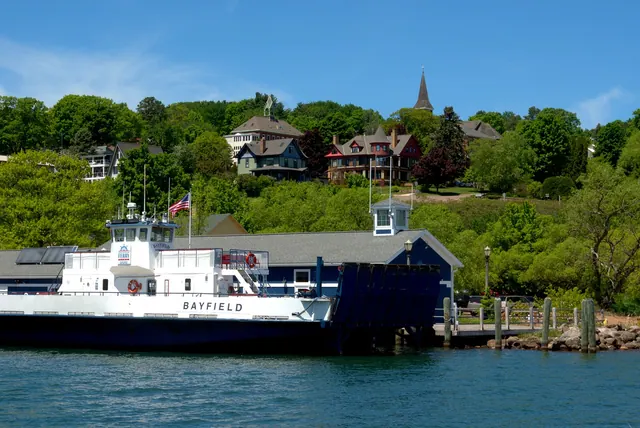
Casco Bay Lines serves Portland, Maine and the islands offshore: Peaks, Great Diamond, Little Diamond, Long, Chebeague and Cliff. It runs year round, which changes the accessibility picture because ice and weather become part of the boarding decision.
Casco Bay Lines vessels and terminals are a mix. The terminal at Portland has a ramp and a waiting area, and the vessels have accessible routes from the boarding point to a cabin. The smaller island docks are the weak link.
Some island landings are steep, unpaved or exposed to weather. A rider who can board in Portland may still face a difficult landing at the other end. That is worth checking before booking, because the operator cannot rebuild a private or town-owned dock.
Winter service is thinner. Fewer boats run, and the ones that do may be smaller. Riders who need assistance should call ahead rather than assume the summer routine applies.
The Maine State Ferry Service runs a separate set of routes from Rockland and Lincolnville, so do not assume Casco Bay Lines rules cover those vessels. They are different operators under the same federal duties.
If you are building a trip around the bay, our guide to walk on ferry routes companies covers how the sailings fit together across two days.
Service animals, wheelchairs and mobility devices on board
Service animals ride free. A service animal is a dog trained to do work or perform a task for a person with a disability, and a ferry operator may not charge a fee or demand documentation for it.
Pets are different. An operator can charge for a pet, restrict where it goes and ask that it stay in a carrier or on a leash. Do not assume the pet policy covers a service animal, because it does not.
Wheelchairs and mobility devices are covered by the ADA Requirements: Wheelchairs, Mobility Aids, and Other Power-Driven Mobility Devices | ADA.gov, which explains what operators may and may not ask about a device.
The rule splits manual wheelchairs and power chairs from other power-driven mobility devices such as scooters and some e-scooters. Operators generally must allow wheelchairs anywhere foot passengers go.
For other power-driven devices, an operator can ask about the device and set reasonable rules based on safety and the vessel's design. On a ferry, the practical limits are weight, turning space and the gangway width.
Batteries are the other question. Lithium and sealed batteries are common on mobility devices, and operators may ask how the battery is secured or whether it is damaged. That is a safety check, not a bar to boarding.
A short checklist helps before any sailing:
- Call the operator ahead and say what device you use and what assistance you need.
- Ask about the gangway at your departure and arrival terminals, not just the vessel.
- Check the tide for your sailing time, because low water can steepen the ramp.
- Confirm whether the restrooms on your specific vessel are accessible.
- Ask where the accessible seating and evacuation route are on that class of boat.
- Bring the battery paperwork if your device uses a large lithium pack.
- Note the operator's complaint contact before you travel, not after.
How to file an ADA ferry accessibility complaint
Start with the operator. Most problems, a broken elevator, a crew that would not help, a ramp that was blocked, get fixed faster through the operator's own process than through a federal case.
WSF has a dedicated route. The Disability access concerns - ADA | WSDOT explains the WSDOT ADA disability access concerns process for ferry accessibility complaints.
For MBTA ferries, complaints go to the MBTA's accessibility office and then, if unresolved, to the Federal Transit Administration. Casco Bay Lines takes complaints directly, and Maine's state transit oversight can follow.
Write down the basics while they are fresh: date, sailing, vessel name, terminal, what happened and who you spoke to. A complaint without a sailing time is hard to investigate.
- Report the problem to the operator the same day, by phone or through its online form.
- Keep the reference number or the name of the person who took the report.
- If nothing changes, file with the federal agency that funds or regulates the service, the FTA for transit ferries or the Department of Transportation for others.
- Send a copy to the state oversight body if the operator is state run.
- Keep your own record of dates and responses until the case closes.
The Department of Justice handles ADA complaints against public entities through its own portal. That route is slower, but it creates a paper trail that operators notice.
Complaints about a vessel's physical condition, a failed lift or a broken ramp, can also go to the Coast Guard, which inspects the boat. That is a separate track from the ADA process and worth using when the problem is hardware rather than service.
Common questions
Does the ADA cover private ferry companies? Yes, in most cases. Title III covers private entities that serve the public, and Title II covers public operators. The specific duties differ, but both must provide access.
Can a ferry operator charge me extra for assistance? No. Assistance with boarding is part of the service, not an add-on. A surcharge for a wheelchair user or a rider with a service animal is not allowed.
What if the elevator at the terminal is broken? The operator must provide an alternative accessible route to the vessel. If no route exists, ask for the reason in writing and file a complaint.
Do I need to give notice before I travel? Not usually, but calling ahead helps on small vessels and in winter. It also lets the crew plan the boarding sequence.
Are service animals allowed in the cabin? Yes. A service animal stays with its handler. An operator may not banish it to the car deck or charge a fee for it.
Who investigates an ADA ferry complaint? It depends on the operator. The FTA handles transit ferries, the Department of Justice handles public entities generally, and the Coast Guard handles vessel safety defects.