Costs
Part of Five kinds of ferry route, told through the water each one crosses
Budgeting for a ferry route, not just a single ticket
How to budget for a route rather than a ticket, why forecast uncertainty is measurable, and what current data is used for beyond planning your day.
What to take away
- Budget the route, not the ticketfare plus a contingency sized to how exposed the crossing is.
- Sheltered urban runs add almost nothing. Open-coast and seasonal runs should carry 25 to 30 percent, or one day's cost, whichever is larger.
- One lost day typically costs $150 to $250, built from a night of lodging, meals and a change fee.
- Move the date before you shop the fare, and book refundable on the exposed legs.
Budget by archetype
The fare is the smallest part of the decision on an exposed route. What moves a budget is how many sailings run each day, how far the backup port is, and how fast the operator can lift you onto the next boat. Our guide to five kinds of ferry route sorts the network on those lines.
Example route
- Urban harbor hop
- Staten Island Ferry, New York
- Sheltered sound crossing
- Seattle to Bainbridge Island
- Open-coast island run
- Casco Bay Lines and Maine State Ferry runs
- Long-haul marine highway
- Marine Atlantic and BC Ferries
- Seasonal park run
- Island Packers to Channel Islands
Exposure
- Urban harbor hop
- Sailings every 30 minutes, almost never cancelled
- Sheltered sound crossing
- Fog and wind delay boats more often than they cancel them
- Open-coast island run
- Fog, swell and wind, two or three sailings a day
- Long-haul marine highway
- Multi-hour crossings, weather plus mechanical faults
- Seasonal park run
- Fixed seasonal window, often no second sailing that day
Contingency to add
- Urban harbor hop
- None, and the ride is free
- Sheltered sound crossing
- 10 percent of fares, plus one spare sailing
- Open-coast island run
- 25 percent of fares, or one day's cost, whichever is greater
- Long-haul marine highway
- 15 percent of fares, plus one day's cost
- Seasonal park run
- 30 percent of fares, plus one day's cost
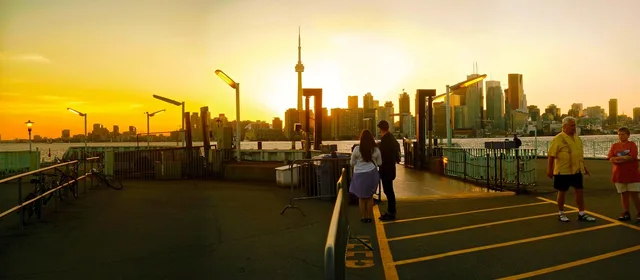
The Staten Island Ferry charges no fare, as the city's official service information confirms. A zero-fare crossing cannot lose you money on the ticket, so its whole risk sits in the day itself.
Two routes with identical fares can carry very different budgets. Fill in the last column before you compare prices, and the choice often stops being close.
Route archetypes and contingency
Archetype
- Sheltered harbor shuttle
- Almost none
- Estuary crossing
- One rebooked sailing
- Lake crossing
- One night, seasonally
- Exposed open-coast hop
- One night, road option
- Tidal narrows
- Timing flexibility, not money
Contingency to carry
- Sheltered harbor shuttle
- Estuary crossing
- Lake crossing
- Exposed open-coast hop
- Tidal narrows
Contingency rule and how to build it
Add the greater of two numbers: the archetype percentage of your total fares, or one day's lost cost.
Contingency = the larger of (archetype percentage of fares) or (one day's lost cost).
Build it in five steps.
- Add every fare on the route, including the return leg and any inter-island hop.
- Add the fixed extrasparking, a bike or pet surcharge, a cabin if the route has one.
- Apply the percentage from the table above.
- Compare that figure with one day's lost cost and keep the larger.
- Write the total beside the ticket price before you choose.
The $150 to $250 band is a typical range, not a quoted price. It is built from one unplanned night in a coastal gateway town, two or three meals, and any rebooking fee. Use the hotels you would actually book. Our guide to what a badly planned ferry weekend costs runs the same arithmetic across a whole trip.
Example: two routes, two budgets
Two crossings show how far a route budget drifts from a fare.
Two routes, two budgets
Seattle to Bainbridge, walk-on
- Round-trip adult fare
- about $10
- Archetype
- Sheltered sound crossing
- Contingency added
- 10 percent, about $1
- One lost day
- $150 to $250
- Route budget to plan with
- about $11, plus one spare sailing
Open-coast island run
- Round-trip adult fare
- typical $60 to $90
- Archetype
- Open-coast island run
- Contingency added
- 30 percent, about $20 to $30
- One lost day
- $150 to $250
- Route budget to plan with
- $230 to $365
The Washington State Ferries fare table lists walk-on prices by route, so confirm the current number for your date. A missed boat on the Bainbridge run costs about 35 minutes. On the island run it can cost the day.
The second route looks pricey at the ticket and three or four times that once a lost day is priced in. That gap is the argument for budgeting a route rather than ranking fares.
Shoulder-season dates that cut price and risk
Move the date before you shop the fare. In the Pacific Northwest and New England, the two windows that typically shift both price and cancellation risk are mid-September to mid-October and mid-April to mid-June. They sit between the summer peak and the thin winter timetable, as our guide to Pacific storm cycles and walk-on timing sets out.
In the Atlantic hurricane belt, the season runs June 1 to November 30, and the quieter shoulders fall in June and again in late October and November. Check the timetable too. Several island routes drop to one or two sailings a day outside summer, which removes the backup you were counting on.
Forecast uncertainty is measured, not guessed
Forecast uncertainty on a tropical system is quantified rather than vague. shtml) from a five-year sample of its own official errors, sizing circles along the track so about two-thirds of historical errors fall inside them. Roughly a third of past tracks sat outside, so a route just beyond a cone is not automatically safe.
Forecast cone error rate
- Two-thirds of historical forecast errors fall inside each circle
- Cone circles sized at 12, 24, 36, 48, 60, 72, 96 and 120 hours
- About a third of historical tracks fell outside the equivalent circles
For a route budget the cone settles one question: add the open-coast contingency now, or move the date. The sailing call belongs to the operator. If you want the planning layer beneath it, compare routes using charts and zone forecasts puts two options side by side.