Guides
Part of Ferry travel gear reviewed: what holds up and what does not
Ferry travel gear itinerary: a route-agnostic two-day plan
This ferry travel gear itinerary is a route-agnostic two-day shakedown for testing a hooded rain shell, gloves, dry bag, phone pouch, and daypack.
What to take away
- A short trip on a familiar route can reveal kit gaps before a longer trip.
- Tidal currents are the only currents that can be predicted for future dates, which makes them ideal to plan around.
- Radar coverage extends offshore in places, which lets you watch a squall approach rather than meet it.
- Write down what failed. That list is worth more than any gear review.
Why a shakedown trip is worth two days
People discover their gear problems on the trip that mattered. A practical ferry travel gear itinerary uses a deliberate two-day shakedown on a short, frequent route to find the same problems when the stakes are a wet sandwich rather than a ruined week.
Pick a route you can abandon easily, with a boat every hour or two, and set out to be on deck in whatever the weather offers. The point is exposure, not distance. This is a route-agnostic framework, not a specific sailing recommendation: check the ferry operator's sailing schedule, fares, and deck-access rules before choosing a walk-on crossing. Pack a hooded rain shell, gloves, a hat, a dry bag for spare layers, a waterproof phone pouch, and a small daypack.
Day one: currents, and what your kit does when wet
Plan the first day around moving water. Moving water is where a coast is interesting and where spray happens. NOAA explains the distinction between a tide and a current: tides are the vertical rise and fall driven by the gravitational forces of the moon and sun, while a current is the horizontal motion of water. For a planned crossing, use NOAA Tides and Currents for tide predictions and, at supported stations, current predictions; check the station closest to your route.
Tides create currents in the ocean, near the shore and in bays and estuaries. Tidal currents are the only type of current that changes in a very regular pattern and can be predicted for future dates.
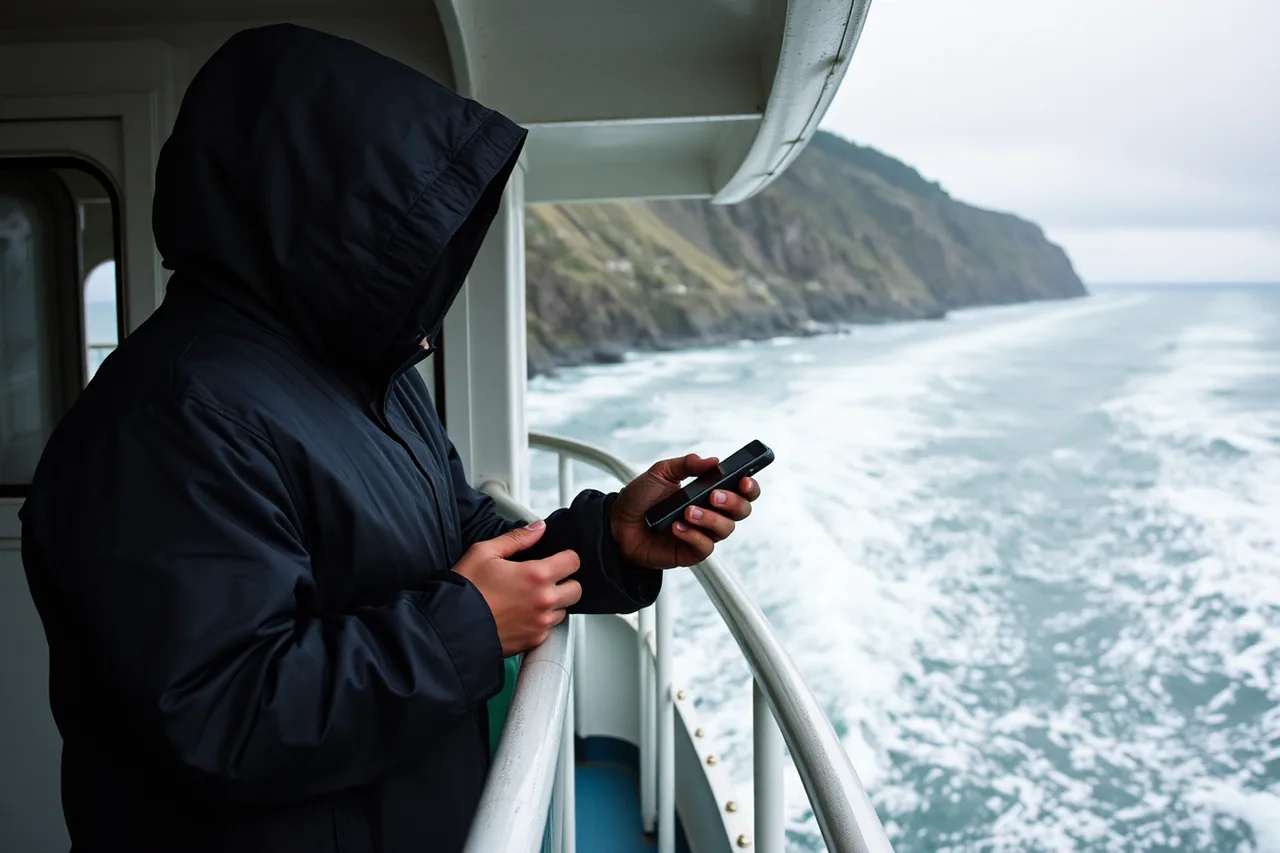
Take the sailing that crosses a tidal narrows near peak flow, stand outside for the whole crossing, and then take stock. Wet cuffs, a hood that will not stay up, a phone you could not operate with cold hands. Write each one down.
Day two: watch weather arrive
The second day is about seeing conditions coming, not reacting to them. The National Weather Service notes that Next Generation Weather Radar uses conventional reflectivity observations and the Doppler effect to measure motion within storms.
It has a maximum range of 230 kilometers, or 125 nautical miles. Although the network is land-based, some radar coverage extends offshore, with the greatest offshore coverage along the Atlantic and Gulf coasts.
Spend the morning tracking a shower or squall line on radar and then watching it arrive from a headland or a deck. It teaches you how much warning you actually get, which is the number that determines whether a hooded rain shell needs to live in your hand or in your daypack.
The shakedown checklist
- Did the hooded rain shell keep spray out for a full crossing?
- Could you use your phone or camera with cold, wet hands in gloves?
- Could you operate the phone pouch or a daypack zipper one-handed while holding a rail?
- Was the loaded daypack comfortable to carry for thirty minutes?
- Did the dry bag or daypack straps need rinsing, and could you reach all the wet areas?
- What did you wish you had brought, such as a hat or warmer gloves?
What to do with the answers
Fix the top three and ignore the rest. Most gear lists grow endlessly because every trip adds an item and nothing is removed.
A shakedown trip is a good time to take things out. The honest test is simple: anything you did not reach for in two days of deliberate exposure is not coming on the real trip.
The failure modes behind the checklist are set out in our ferry gear guide, and the same two-day structure applied to islands is in our two-day island itinerary.