Guides
Part of US Ferry Travel: Planning Around Tides and Marine Forecasts
Where slack belongs in US ferry travel planning
US ferry travel planning means placing buffer days before flights and paid bookings, then checking NOAA short-range forecasts and station IDs before you go.
What to take away
- In US ferry travel planning, slack belongs where a failure is expensive, which usually means the leg before a flight or a paid booking.
- Two connected ferries in one day is a plan with no margin. Treat it as a plan that will sometimes fail.
- Short-range ocean forecasts exist for many U.S. ports and estuaries and refresh several times a day.
- Find your route's water level station once, write down its ID, and reuse it every trip.
Slack is a placement problem, not a quantity problem
Adding a spare day does nothing if it sits in the wrong place. The buffer has to sit immediately before the commitment you cannot move. That is almost always a flight home, a paid non-refundable booking, or a second crossing that only runs once a day.
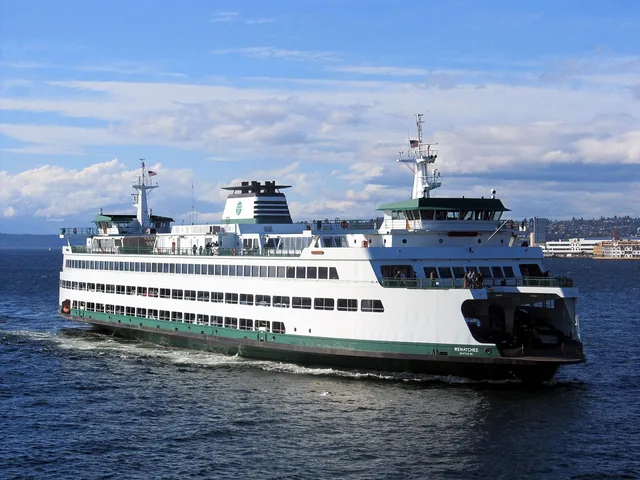
Consider a hypothetical trip using Washington State Ferries' Anacortes–Friday Harbor route, with a fixed flight after the return to the mainland. If your chosen sailing is the last viable crossing that day, treat it as exposed for that itinerary: a spare day earlier in the island stay will not protect the flight. Place the buffer after the return crossing and before the flight, and check WSF's current timetable to confirm your options.
Place buffer before immovable
- StartWork backwards from immovable thing
- BeforePut buffer directly in front of it
- EarlierTreat everything earlier as flexible
- ResultOne well-placed spare day calmer
Work backwards from the immovable thing. Put the buffer directly in front of it, then treat everything earlier as flexible. A week with one well-placed spare day is calmer than a week with three badly placed ones.
Rules that keep an itinerary from tightening
- One ferry per day where the crossing is exposed. Two only where both are short and frequent.
- Never plan a connection that requires the first boat to be on time and the second to be the last of the day.
- Arrive at the terminal for the sailing before yours on the day you fly out.
- Keep one activity on the departure side of the water that you would enjoy anyway.
- Write the fallback down before you leave. A fallback you have to invent while standing at a ramp is not a fallback.
Check the short-range picture, not just the week ahead
Beyond the general forecast, NOAA runs modeling systems for specific bodies of water. An Operational Forecast System produces a nowcast and a forecast of water levels, currents, salinity, water temperature and wind for a given area. NOAA's explanation of operational forecast systems describes coverage in critical ports, harbors and estuaries around the nation and the Great Lakes.
Use the forecast horizon and issue schedule for the product covering your route rather than assuming one nationwide schedule.
The issue schedule is the useful part. A forecast you checked three days ago is not the latest guidance, and on a marginal day the current regional forecast can affect whether you leave early.
Find your station once and keep it
Water level data is organized by station, and the station is the thing worth saving. NOAA's tide prediction station finder searches by state, station name, station identifier or latitude and longitude.
Identifiers run to seven characters. Look up the station nearest your terminal once, note the ID, and you will never hunt for it again.
Doing this a week ahead rather than on the morning of travel is the whole trick. It converts a frantic search into a glance.
The order that works
Fix the immovable dates first. Choose the crossings second, largest and most exposed first. Book accommodation third, refundable where the route is exposed. Add activities fourth, and only where a lost afternoon would not break anything. Confirm the timetable with the operator last, close to the date, and again on the morning itself; for Washington State Ferries' Anacortes–Friday Harbor route, check WSF's current sailing information.
Reversing that order is how people end up with a room they cannot reach and a tour they cannot attend. The full sequence, with the questions to ask at each stage, sits in our U.S. ferry travel guide.