Features
Part of How to avoid ferry trip mistakes in 2027
Stops that rescue a ferry trip when plans go wrong
Sheltered stops that rescue a canceled ferry day: lagoons, mangrove boardwalks and harbor towns worth visiting whether or not the boat actually runs.
What to take away
- Every ferry itinerary should carry one stop that does not need a boat.
- Sheltered water behind a natural barrier is usually calm when the open coast is not.
- Mangrove and lagoon shorelines are the classic bad-weather alternative on southern coasts.
- Choose the rescue stop when you plan, not when you need it.
Why a rescue stop is planning, not consolation
A canceled sailing costs a day only if you have nothing else. Pick one stop per crossing that sits on the departure side, works in poor weather, and does not need a reservation. That single choice converts a lost day into a different day.
The best rescue stops share three features. They are sheltered from the wind that canceled your boat, they are close to the terminal, and they are interesting enough that you would go anyway.
The third feature does most of the work. A stop chosen only as a consolation prize feels like one. A stop you were already curious about turns a canceled morning into the part of the trip you talk about afterwards.
Lagoons: sheltered by definition
A lagoon is the geography of shelter. NOAA defines a lagoon as a body of water separated from larger bodies of water by a natural barrier such as sandbars, barrier reefs or coral reefs, with the word coming from the Italian laguna, meaning pond or lake. It distinguishes atoll lagoons from coastal lagoons, and cautions that names mislead: Laguna Madre on the Texas Gulf Coast is actually made up of smaller bays and lagoons, while Laguna Beach in Southern California is a beach and not a lagoon at all.
For a traveler, that barrier is the point. When an onshore wind has made the open crossing untenable, the water behind the barrier is often flat, walkable and full of birds.
Mangrove shores: the southern alternative
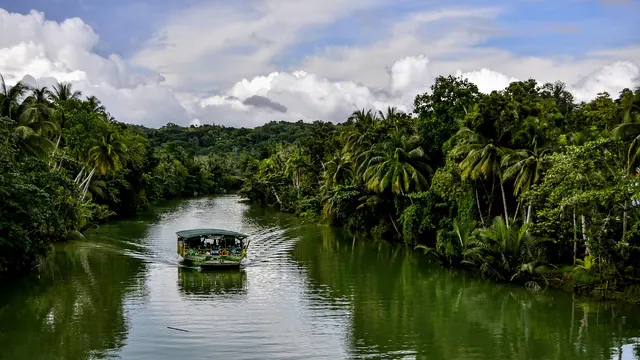
On warm coasts, a mangrove shoreline is the other reliable bad-weather stop. NOAA describes mangroves as a group of about 80 species of trees and shrubs living in the coastal intertidal zone, growing in low-oxygen soil where slow-moving water lets fine sediment accumulate, and restricted to tropical and subtropical latitudes because they cannot withstand freezing. Their dense tangle of prop roots lets them handle the daily rise and fall of the tides, with most mangroves flooded at least twice a day, and the roots slow tidal water so sediment settles out and builds the muddy bottom. Mangrove forests stabilize the coastline and reduce erosion from storm surge and currents.
A boardwalk through mangroves is one of the few coastal walks that improves in overcast, still conditions, which is often exactly what follows a canceled crossing.
A shortlist of rescue stops
- A lagoon or back-barrier bay with a path.
- A mangrove or marsh boardwalk.
- A working harbor with a covered fish market or chandlery.
- A maritime museum or lifesaving station.
- A river mouth with a bridge walkway.
- A public library with local archives, which is the most underrated wet-weather stop on any coast.
Building it into the trip
Name the rescue stop next to each crossing in your itinerary, with directions, so nobody has to research anything on a bad morning. Two minutes of planning covers the whole trip. The wider error list is in our guide to avoiding ferry trip mistakes, and more low-cost options are in our free stops for a longer ferry trip.
Common questions
How far from the terminal should a rescue stop be? Close enough to reach and return without committing the day. Twenty minutes is a good limit.
What if the whole area is exposed? Then look inland. A river valley or an estuary head is usually calmer than the coast.
Do I need to book anything? No. The point of a rescue stop is that it works without notice.
Is it worth doing even if the boat runs? Often yes, on the return leg or the morning before. The best rescue stops are good stops.